
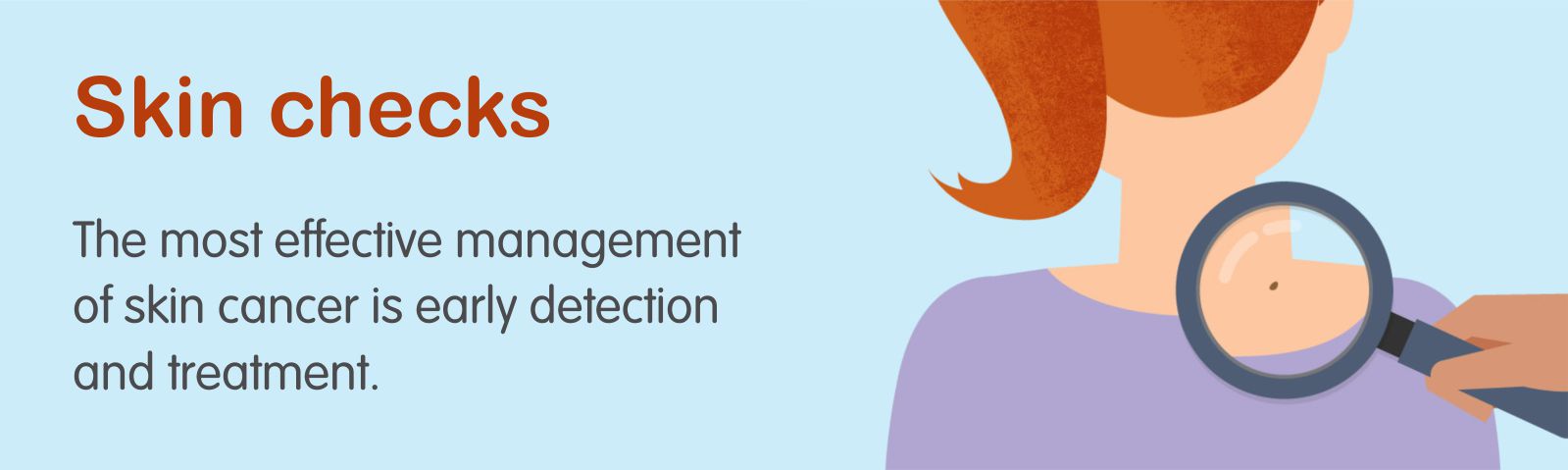
More than 1300 Australians die from skin cancer each year, and one in two will get skin cancer in their lifetime. The most effective management for skin cancer is early detection and treatment.
Several of the doctors at Warrandyte Road Clinic have undertaken further training to accurately diagnose and manage skin cancers.
If surgical excision is indicated, most skin cancers are able to be safely excised in the treatment room at Warrandyte Road Clinic. If a skin cancer is unable to be definitively treated in our clinic, the doctors have excellent working relationships with local dermatologists and plastic surgeons for rapid diagnosis and treatment.
Frequently asked questions
A skin check involves examining the skin using a handheld magnifying device called a dermatoscope.
Skin cancers can occur even in areas that do not get much sun exposure, so we usually recommend a full skin check, including areas covered by your undergarments. However, if you would prefer to have only a specific spot or area examined, that is absolutely fine. The genitals and breasts are not routinely examined, but we recommend checking these areas yourself before your appointment and letting your doctor know if there is anything you would like assessed.
Several doctors at Warrandyte Road Clinic have undertaken additional training in skin cancer diagnosis and management and have extensive experience in performing skin checks. They are also trained in dermatoscopy, which can help improve the assessment of suspicious skin lesions.
Please report to reception when you arrive.
During the consultation, the doctor may examine the skin on your face, neck, arms, hands, torso, legs and feet.
For a full skin check, you will need to remove your clothing down to your undergarments. Please avoid or limit make-up, fake tan and nail polish on the day, as these can make assessment more difficult. If you have a lesion in a covered area that you would like checked, please let your doctor know.
Let reception or the doctor know if you would like a chaperone to be present during your appointment.
A skin check appointment usually takes around 15 minutes. Longer appointments may be needed if a procedure is required.
Yes. A skin check is safe and painless.
If your doctor finds a spot of concern, they will discuss the next steps with you. This may include monitoring the area, arranging a biopsy, or recommending treatment.
Yes. You are welcome to bring a family member or friend with you.
Many skin cancer procedures can be performed at Warrandyte Road Clinic. If specialist treatment or surgery is needed, we can arrange a prompt referral.
This depends on your individual risk factors, including your personal or family history of skin cancer, number of moles, skin type, history of sunburn and sun exposure. Some people may need checks every few months, while others may only need them every few years. Your doctor can advise what is appropriate for you.
No. Most skin cancers are very treatable, especially when found early. Basal cell carcinoma, the most common type, rarely spreads to other parts of the body.
Melanoma is more serious, but it can often be treated successfully if detected early. This is why regular skin checks and early review of changing spots are important.
People at higher risk of skin cancer include those with:
- a personal or family history of skin cancer
- a large number of moles
- fair skin
- a history of sunburn
- a weakened immune system or use of immunosuppressive medication
Skin cancer is often highly treatable when detected early.
No. Most new spots are harmless, such as freckles, age spots or pimples. However, it can sometimes be difficult to tell the difference between a benign spot and a skin cancer. It is a good idea to mention any new or changing spots to your doctor.
Most children do not need routine skin checks. Skin cancer is rare in children. However, if your child has a spot that is growing quickly, looks unusual, or is changing over time, please make an appointment for assessment.
A skin check takes about 15 minutes and requires a standard dedicated appointment. Make sure you tell us about any spots or moles you have which are new, sore, changing or unusual.
GPs with special interest in Women’s Health
Dr Sia Tan
Dr Sia Yang Tan (Sia) completed his medical degree at the Australian National University (ANU). He has a special interest in Skin Cancer Medicine, with multiple qualifications from the Skin Cancer College Australasia and the University of Queensland as well as extensive experience at the Complete Skin Cancer Clinic.
Dr Jason Oh
Dr Jason Oh graduated from the University of Melbourne in 2000. He has a Diploma of Skin Cancer Surgery from the Australasian College of Cutaneous Oncology as well as a Certificate of Dermoscopy from the Skin Cancer College Australasia. He regularly performs skin cancer screening checks and skin cancer surgery at Warrandyte Road Clinic.